Why Screening Matters
Oral cancer is far more treatable when it's caught early, but early lesions are usually painless and easy to overlook. That's precisely why screening is built into routine preventive appointments rather than left to chance.
Because we examine your mouth regularly, we're well placed to notice a change that wasn't there six months ago.
Who Should Be Screened
What the Screening Involves
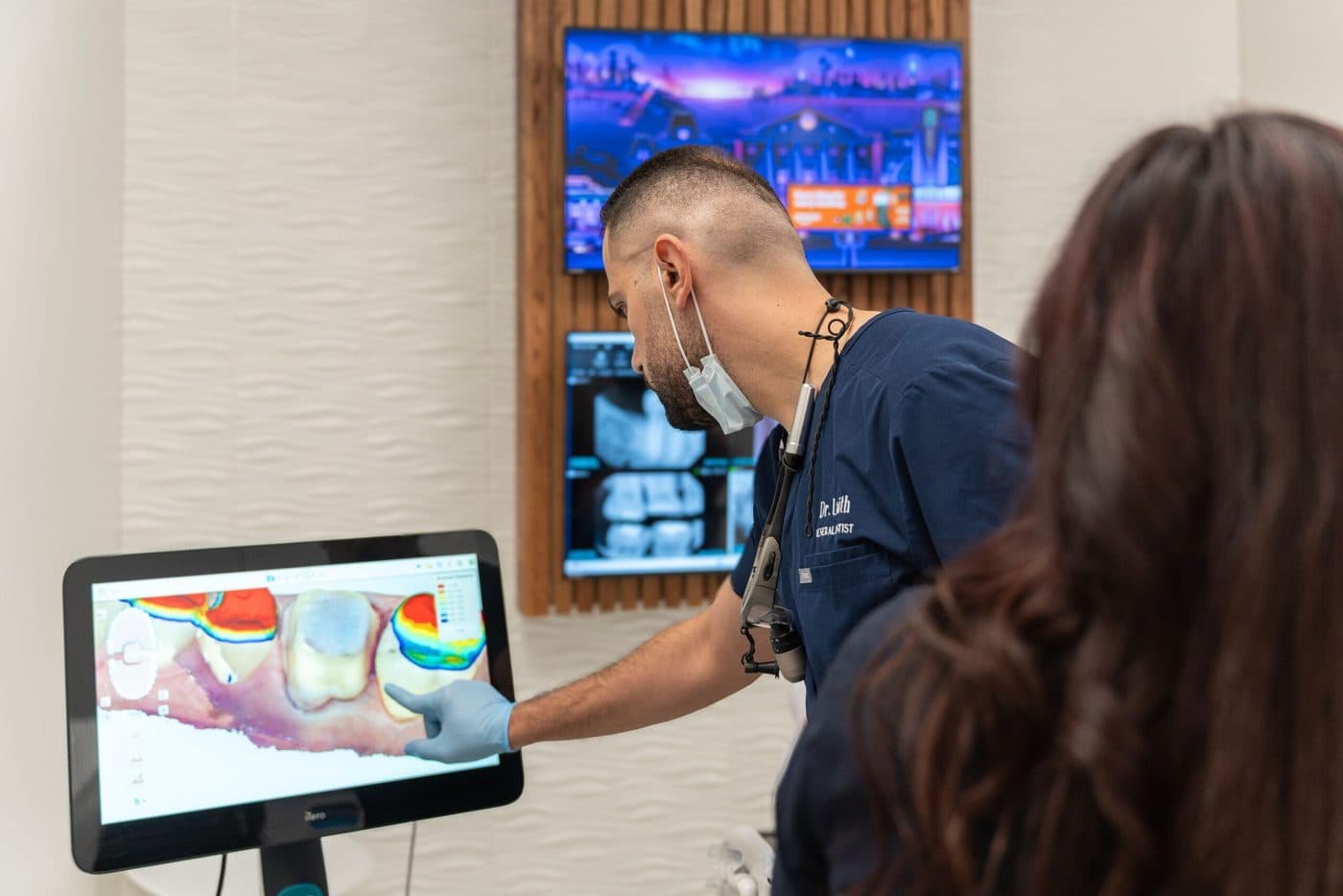
It takes only a few minutes and involves no discomfort. We visually examine the soft tissues of your mouth, tongue, throat and lips, and gently feel the neck and jaw for anything unusual.
- Sores that haven't healed within two weeks
- Red or white patches on the soft tissue
- Lumps or thickened areas
- Persistent hoarseness or difficulty swallowing
- Numbness or unexplained bleeding
Good to Know
Frequently Asked Questions
Does the screening cost extra?
It's performed as part of your routine preventive exam.
What happens if you find something?
Most findings turn out to be harmless. If something needs a closer look, we'll explain it clearly and refer you for evaluation without delay.
How often should I be screened?
At every routine dental visit, which for most patients means twice a year.
Ready When You Are
A Few Minutes, Well Spent
Book your routine visit and we'll include a screening as standard.